Step Pyramid of Djoser: History, Architecture & Complete Visitor Guide
Step Pyramid of Djoser: History, Architecture & Complete Visitor Guide
The Step Pyramid of Djoser is one of the most remarkable monuments in Egypt and one of the most important landmarks in the history of ancient architecture. Located in the ancient necropolis of Saqqara, south of Cairo, the pyramid attracts travelers who want to understand how the great pyramids of Egypt developed.
Built more than 4,500 years ago for Pharaoh Djoser, the monument represents a major transformation in ancient Egyptian architecture. Instead of the traditional flat-roofed tomb, architects created a massive six-level structure that rises dramatically above the surrounding desert.
Today, the Step Pyramid is one of the highlights of any visit to Saqqara.
What Is the Step Pyramid of Djoser?
The Step Pyramid was built as the funerary monument of Pharaoh Djoser, a ruler of Egypt's Third Dynasty.
It is widely recognized as the earliest large-scale stone pyramid in Egypt and an important milestone in the development of pyramid construction.
The pyramid has six stepped levels and originally reached approximately 62 meters in height. It was constructed as the centerpiece of a much larger funerary complex containing courtyards, temples, ceremonial structures, and other buildings.
The entire complex was designed to support the religious rituals associated with the pharaoh's death and afterlife.
Who Built the Step Pyramid?
The Step Pyramid is traditionally credited to Imhotep, an influential official, architect, priest, and scholar who served under Pharaoh Djoser.
Imhotep is particularly famous because of his role in transforming the traditional mastaba tomb into a monumental stepped structure.
His architectural achievement influenced later generations of Egyptian builders and helped establish techniques that eventually led to the smooth-sided pyramids of Dahshur and Giza.
When Was the Step Pyramid Built?
The Step Pyramid was constructed during the Third Dynasty, around the 27th century BC.
This makes it significantly older than the famous pyramids at Giza.
The monument represents an early stage in the development of royal pyramid architecture. Egyptian builders experimented with increasingly ambitious designs before eventually creating the smooth-sided pyramids seen at Dahshur and Giza.
Why Does the Pyramid Have Steps?
The pyramid's distinctive stepped appearance resulted from the way its structure developed during construction.
The monument began as a large mastaba-like structure. Additional layers were then added, creating a series of progressively smaller levels.
Rather than having smooth outer faces like later pyramids, the finished monument retained its stepped form.
This unusual design is what makes the Step Pyramid instantly recognizable and historically important.
The Step Pyramid Complex
The pyramid itself is only one part of Djoser's enormous funerary complex.
The complex was surrounded by a large enclosure wall and contained courtyards, temples, chapels, ceremonial buildings, and other architectural features.
The structures were connected with the religious ceremonies performed for the deceased king.
Walking through the complex helps visitors understand that ancient Egyptian pyramids were not isolated monuments. They were part of carefully planned religious and funerary landscapes.
The Underground Chambers
Beneath the Step Pyramid is an extensive network of underground passages and chambers.
The underground area was an important part of the royal burial complex and included spaces connected with the pharaoh's funerary rituals.
The walls and chambers demonstrate the importance ancient Egyptians placed on protecting the deceased ruler and providing everything necessary for the afterlife.
Access to particular areas can depend on current archaeological and visitor arrangements, so travelers should check what is open when planning their visit.
Step Pyramid and Egyptian Pyramid Development
The Step Pyramid is important because it helps explain the evolution of pyramid architecture.
Before Djoser's monument, royal tombs were generally based on the mastaba design.
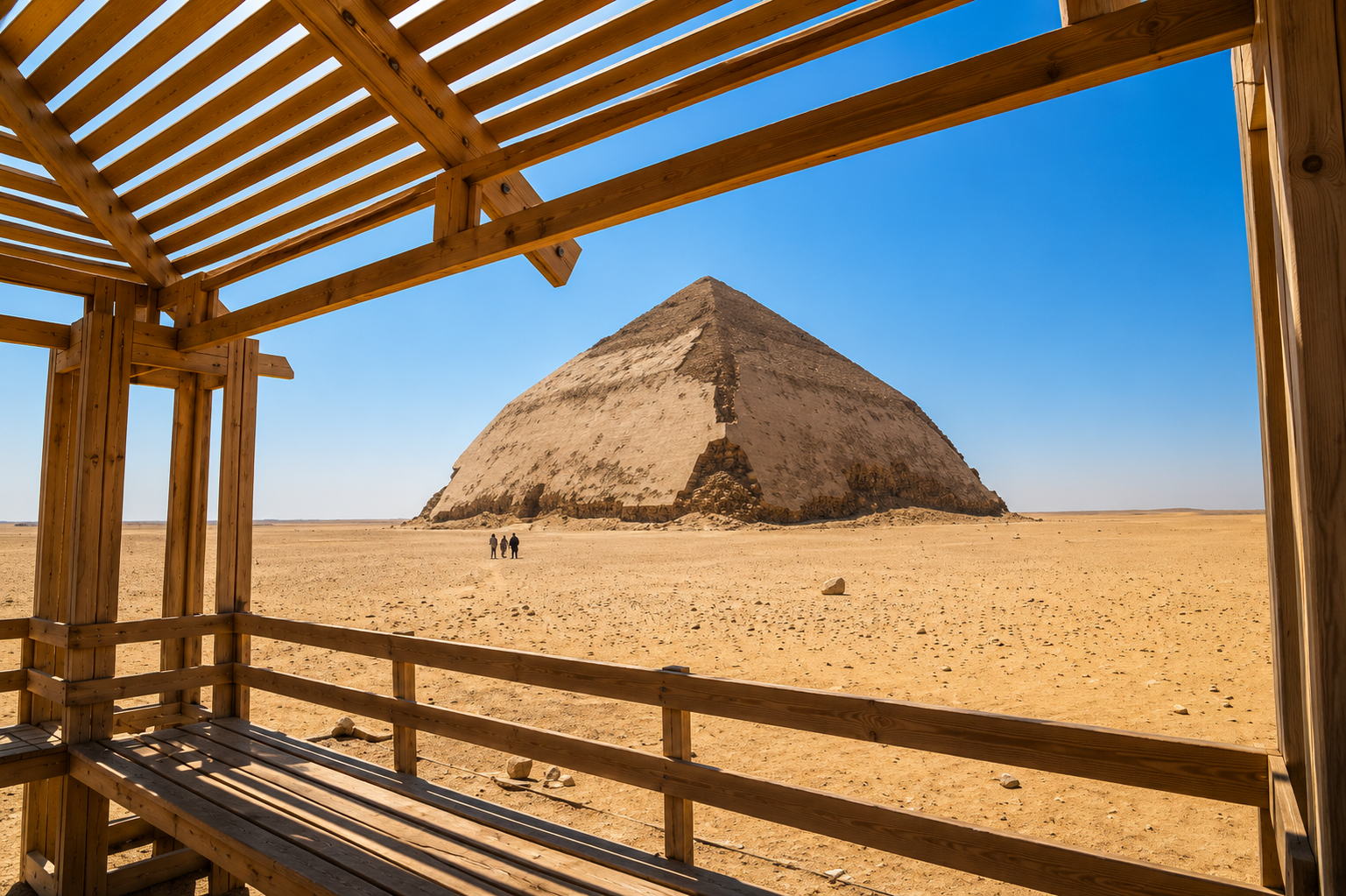
The Step Pyramid introduced a much more ambitious vertical structure. Later architects continued experimenting with pyramid shapes, eventually producing the Bent Pyramid and Red Pyramid at Dahshur.
The architectural knowledge developed through these projects contributed to the construction of the great pyramids at Giza.
For this reason, visiting the Step Pyramid provides useful context for understanding the entire history of Egyptian pyramid construction.
Step Pyramid vs. Great Pyramid of Giza
The Step Pyramid and the Great Pyramid are both famous Egyptian monuments, but they are very different.
The Step Pyramid is older and has a distinctive stepped design, while the Great Pyramid of Giza was built later with smooth outer sides.
The Great Pyramid is also much larger.
However, the importance of the Step Pyramid is not based on its size. Its significance comes from its pioneering architecture and its role in the development of pyramid construction.
Seeing both monuments allows visitors to appreciate how dramatically Egyptian architecture evolved over time.
What Can You See Near the Step Pyramid?
A visit to the Step Pyramid can easily be combined with other attractions in the Saqqara archaeological area.
Depending on the current access arrangements, visitors may explore ancient private tombs, royal pyramids, the Serapeum, and the Imhotep Museum.
The nearby necropolis contains monuments from different periods, making Saqqara much more than a single archaeological attraction.
Travelers can also combine Saqqara with Memphis and Dahshur during a full-day tour from Cairo or Giza.
Best Time to Visit the Step Pyramid
The cooler months between October and April are generally more comfortable for exploring Saqqara.
Early morning is particularly pleasant because temperatures are usually lower and the sunlight can be softer for photography.
During warmer months, visitors should plan carefully, bring plenty of water, and protect themselves from the sun.
Comfortable walking shoes are strongly recommended because exploring the archaeological complex involves walking across uneven surfaces.
How to Get to the Step Pyramid From Cairo
The Step Pyramid is located in Saqqara, south of Cairo.
Visitors can reach the site by private car, taxi, or organized tour. A private guided tour is often convenient because Saqqara covers a large area and contains many monuments that can be difficult to understand without historical context.
Many tours combine the Step Pyramid with Memphis and Dahshur, creating a full-day journey through the development of ancient Egyptian architecture.
How Long Should You Spend at the Step Pyramid?
A visit focused only on the Step Pyramid can take around one to two hours, depending on whether you explore the surrounding complex.
If you plan to visit other parts of Saqqara, such as the tombs, pyramids, Serapeum, and museum, you should allow several hours.
A half-day is a good option for travelers who want to explore Saqqara without rushing.
Is the Step Pyramid of Djoser Worth Visiting?
Absolutely.
The Step Pyramid is one of the most important monuments in Egyptian history and provides a fascinating introduction to the development of pyramid architecture.
Its unusual stepped design, enormous funerary complex, underground structures, and connection with Imhotep make it a unique experience.
For travelers staying in Cairo or Giza, visiting the Step Pyramid is an excellent way to discover a different side of ancient Egypt beyond the famous Giza Pyramids.
Frequently Asked Questions About the Step Pyramid of Djoser
What is the Step Pyramid of Djoser?
The Step Pyramid of Djoser is an ancient Egyptian pyramid located in Saqqara. It was built as the funerary monument of Pharaoh Djoser during the Third Dynasty.
Who designed the Step Pyramid of Djoser?
The pyramid is traditionally attributed to Imhotep, an important architect and official who served Pharaoh Djoser.
How old is the Step Pyramid of Djoser?
The Step Pyramid was constructed during the Third Dynasty, around the 27th century BC, making it more than 4,500 years old.
Is the Step Pyramid older than the Pyramids of Giza?
Yes. The Step Pyramid of Djoser predates the major pyramids at Giza by several centuries.
Why is the Step Pyramid important?
It represents a major development in ancient Egyptian architecture and is considered an important early stage in the evolution of pyramid construction.
How tall is the Step Pyramid?
The Step Pyramid originally reached approximately 62 meters in height.
Where is the Step Pyramid located?
The Step Pyramid is located in the Saqqara archaeological area, south of Cairo and near the ancient city of Memphis.
Can you go inside the Step Pyramid?
Access to the interior and specific areas of the complex can change depending on conservation work and current visitor regulations. Check the latest local information before your visit.
Can I visit the Step Pyramid and Giza in one day?
Yes. It is possible to combine Saqqara and Giza in one day with a well-planned private tour, although travelers should allow enough time for each site.
What else can I see in Saqqara?
Other attractions include ancient mastabas, private tombs, royal pyramids, the Serapeum, and the Imhotep Museum.
Final Thoughts
The Step Pyramid of Djoser is much more than an ancient pyramid. It represents a turning point in Egyptian architecture and provides an important link between early royal tombs and the great pyramids that followed.
From the innovative design associated with Imhotep to the extensive funerary complex surrounding the monument, every part of the site tells a story about ancient Egyptian beliefs, engineering, and royal power.
If you are exploring Cairo, Giza, or the ancient sites around Memphis, make sure the Step Pyramid of Djoser is part of your itinerary. It is one of the best places to understand how the story of Egypt's pyramids began.