Colossus of Ramses II in Memphis: History, Facts & Visitor Guide
Colossus of Ramses II in Memphis: History, Facts & Visitor Guide
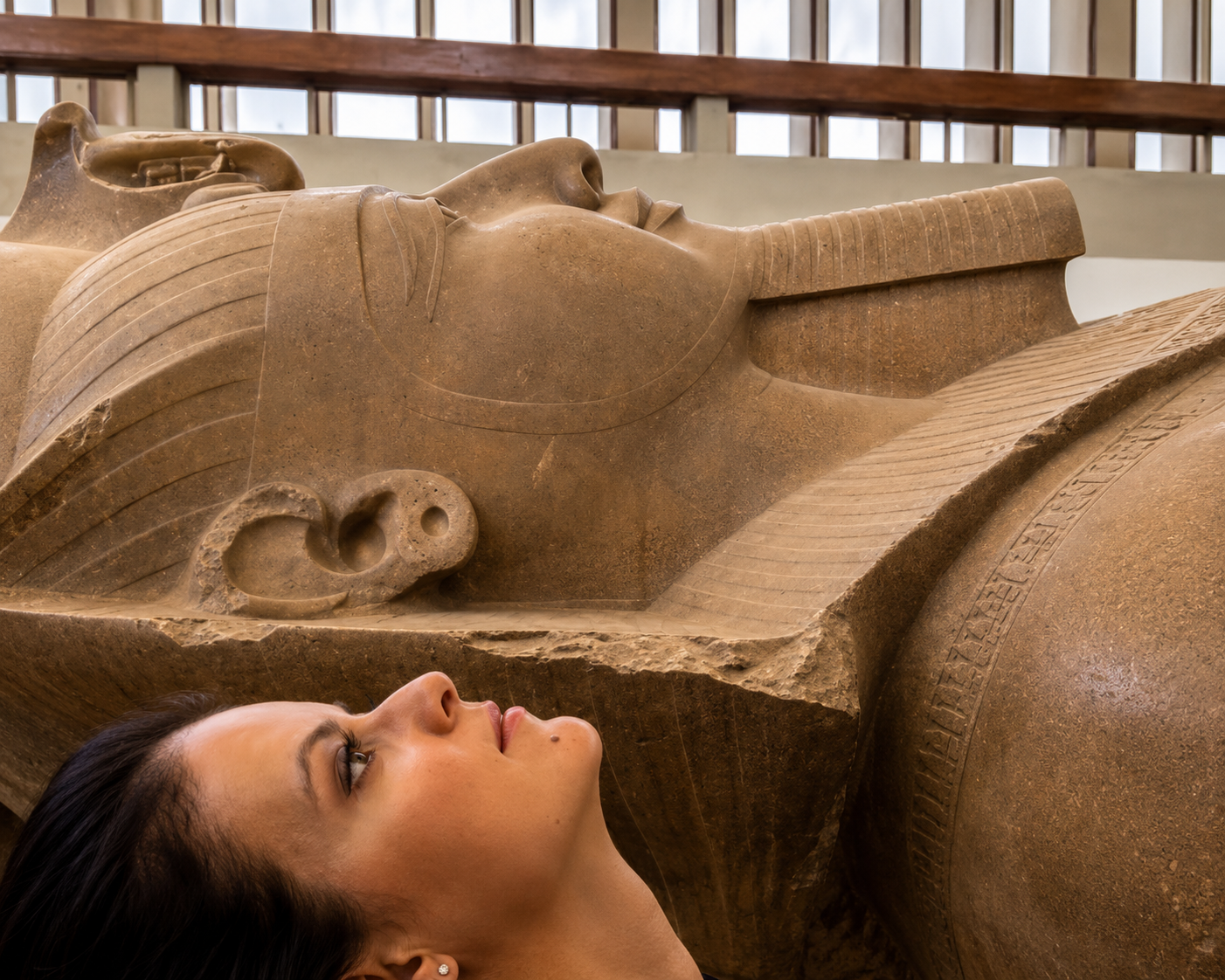
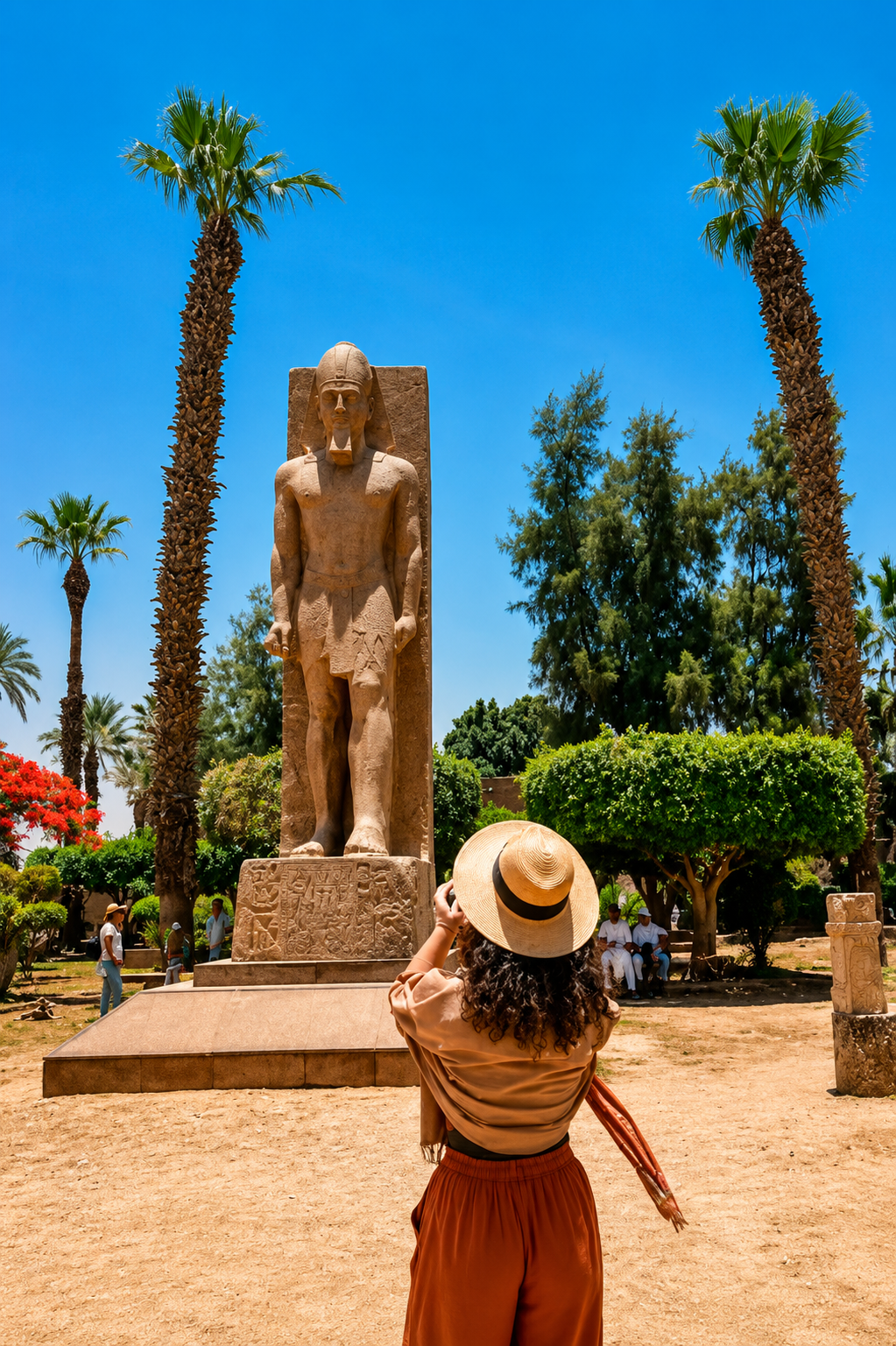
The Colossus of Ramses II in Memphis is one of the most impressive surviving monuments from ancient Egypt. Located at the open-air museum of Mit Rahina, south of Cairo, this enormous limestone statue represents Pharaoh Ramses II, one of the most powerful and celebrated rulers of ancient Egypt.
Although the statue is incomplete, its enormous scale and detailed craftsmanship provide a remarkable glimpse into the artistic and architectural achievements of the New Kingdom.
A visit to the Colossus of Ramses II is also an opportunity to explore the remains of ancient Memphis, one of Egypt's most important cities.
What Is the Colossus of Ramses II?
The Colossus of Ramses II is a monumental limestone statue depicting Pharaoh Ramses II.
The statue originally formed part of the monumental architecture of ancient Memphis and is now displayed at the Memphis open-air museum.
Ramses II is one of the best-known pharaohs in Egyptian history. His long reign was marked by extensive building projects, military campaigns, temples, statues, and monuments throughout Egypt.
The colossus reflects the way Egyptian rulers used monumental art to demonstrate royal power and divine authority.
Where Is the Colossus of Ramses II?
The statue is located at the Memphis Museum in Mit Rahina, approximately south of modern Cairo.
The archaeological site is close to Saqqara and Dahshur, making it easy to include Memphis in a day trip covering several ancient Egyptian attractions.
Many travelers visit the Colossus as part of an itinerary that combines Memphis, Saqqara, and Dahshur.
Who Was Ramses II?
Ramses II ruled Egypt during the 19th Dynasty of the New Kingdom.
He became pharaoh at a relatively young age and ruled for several decades, making his reign one of the longest in ancient Egyptian history.
He is remembered for his monumental construction projects and for the numerous statues and temples commissioned during his reign.
Among his most famous monuments are those at Abu Simbel, the Ramesseum at Luxor, and numerous structures throughout Egypt.
The Colossus at Memphis is another reminder of his enormous influence.
Why Was the Statue Built?
Ancient Egyptian royal statues served several purposes.
They represented the pharaoh and reinforced his presence within temples and religious complexes. They could also be connected with rituals and the king's relationship with the gods.
Large statues such as the Colossus of Ramses II communicated strength, authority, and permanence.
The scale of the monument would have made a powerful impression on anyone entering the area where it originally stood.
The Size of the Colossus
The surviving statue is remarkable for its enormous dimensions.
It was carved from a single block of limestone, demonstrating the extraordinary skill required to extract, transport, shape, and decorate massive pieces of stone.
Because the statue is displayed horizontally, visitors can appreciate its details from close range.
The facial features, royal headdress, inscriptions, and body proportions demonstrate the high level of craftsmanship achieved by Egyptian sculptors.
What Makes the Colossus Special?
The most impressive feature is its scale.
Ancient Egyptian artists created enormous statues of pharaohs to express the power and importance of the king.
The Colossus of Ramses II is especially interesting because it has survived despite the destruction and reuse of many monuments at Memphis.
The statue also provides an opportunity to see details that are difficult to appreciate from smaller objects in museums.
Memphis and the Colossus
The Colossus cannot be separated from the history of Memphis.
Memphis was one of ancient Egypt's most important political and religious centers. The city was closely associated with the god Ptah and became an important center of craftsmanship and sculpture.
Large royal monuments were constructed in and around Memphis, and the surrounding area developed into a vast archaeological landscape.
Today, the Colossus is one of the most recognizable surviving objects connected with the ancient city.
The Memphis Open-Air Museum
The Colossus is displayed within the open-air museum at Mit Rahina.
The museum contains several archaeological remains from ancient Memphis, including statues, sphinxes, architectural fragments, and other objects.
Visitors can explore the site at a manageable pace and then continue to nearby Saqqara or Dahshur.
For travelers with limited time, the museum provides a convenient introduction to the history of Memphis.
The Alabaster Sphinx
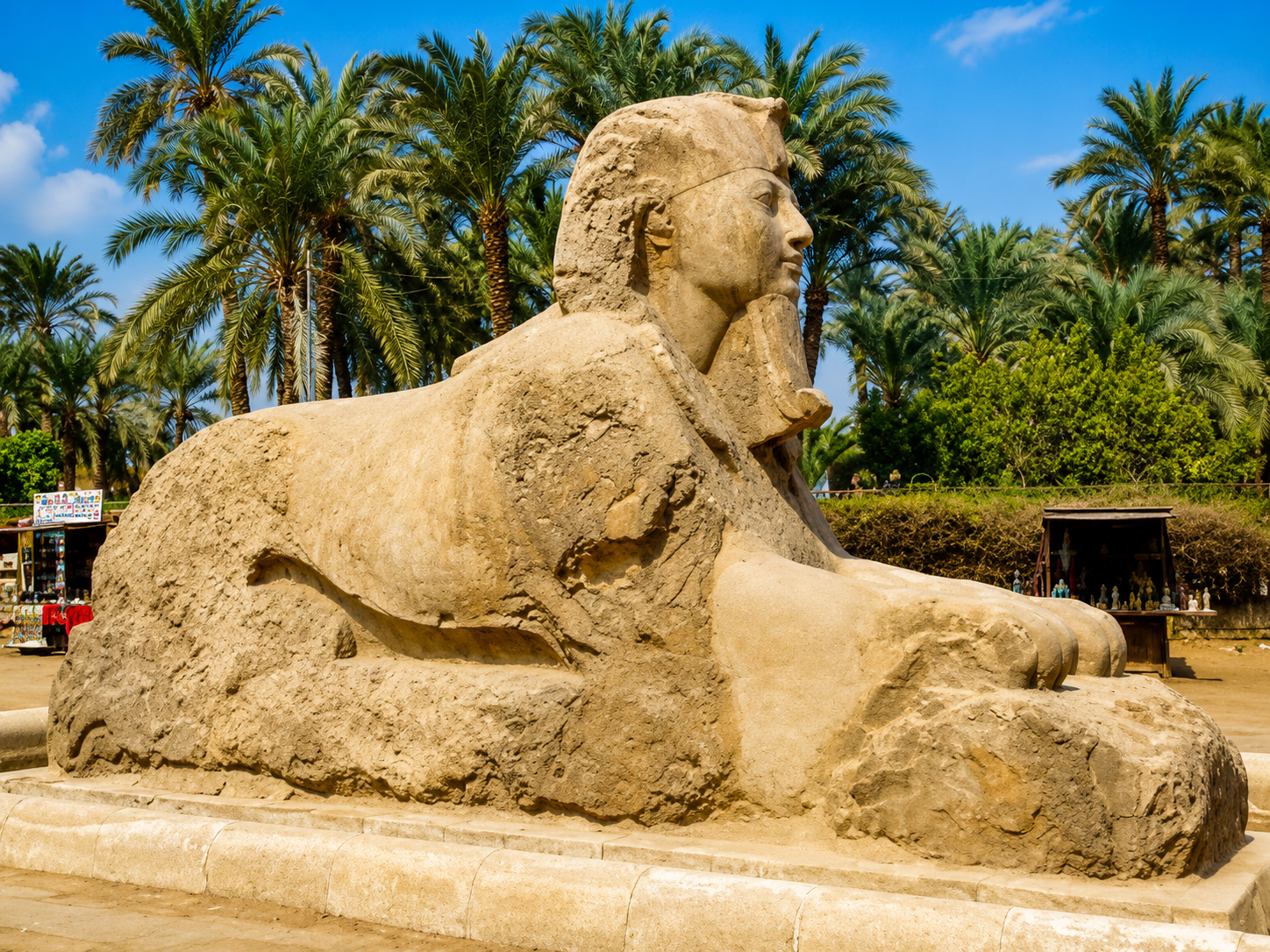
Another important monument at the Memphis site is the alabaster sphinx.
Unlike the Great Sphinx at Giza, which is carved from limestone, the Memphis sphinx is made from alabaster.
The monument is traditionally associated with the New Kingdom and reflects the religious importance of Memphis.
Seeing the sphinx alongside the Colossus provides a useful introduction to the artistic traditions of ancient Memphis.
Colossus of Ramses II vs Great Sphinx
The Colossus of Ramses II and Great Sphinx are both famous ancient Egyptian monuments, but they represent very different forms of sculpture.
The Great Sphinx combines a human head with the body of a lion and is associated with the Giza Plateau.
The Colossus represents a standing royal figure, although the surviving monument is displayed horizontally.
The Great Sphinx is much more famous internationally, while the Colossus provides a fascinating connection with the ancient city of Memphis.
Visitors interested in Egyptian sculpture should ideally see both.
Colossus of Ramses II and Saqqara
Saqqara was the principal necropolis of Memphis.
This means that visiting Memphis and Saqqara together creates a more complete picture of the ancient landscape.
At Memphis, travelers can explore remains connected with the city and its religious institutions.
At Saqqara, they can discover pyramids, private tombs, mastabas, and other funerary monuments.
The two sites were closely connected and are best understood as parts of the same ancient Egyptian world.
Can You Visit Memphis and Dahshur Together?
Yes.
Memphis, Saqqara, and Dahshur are frequently combined into a full-day archaeological tour.
After visiting the Colossus and the Memphis museum, travelers can continue to Saqqara to see the Step Pyramid of Djoser and ancient tombs.
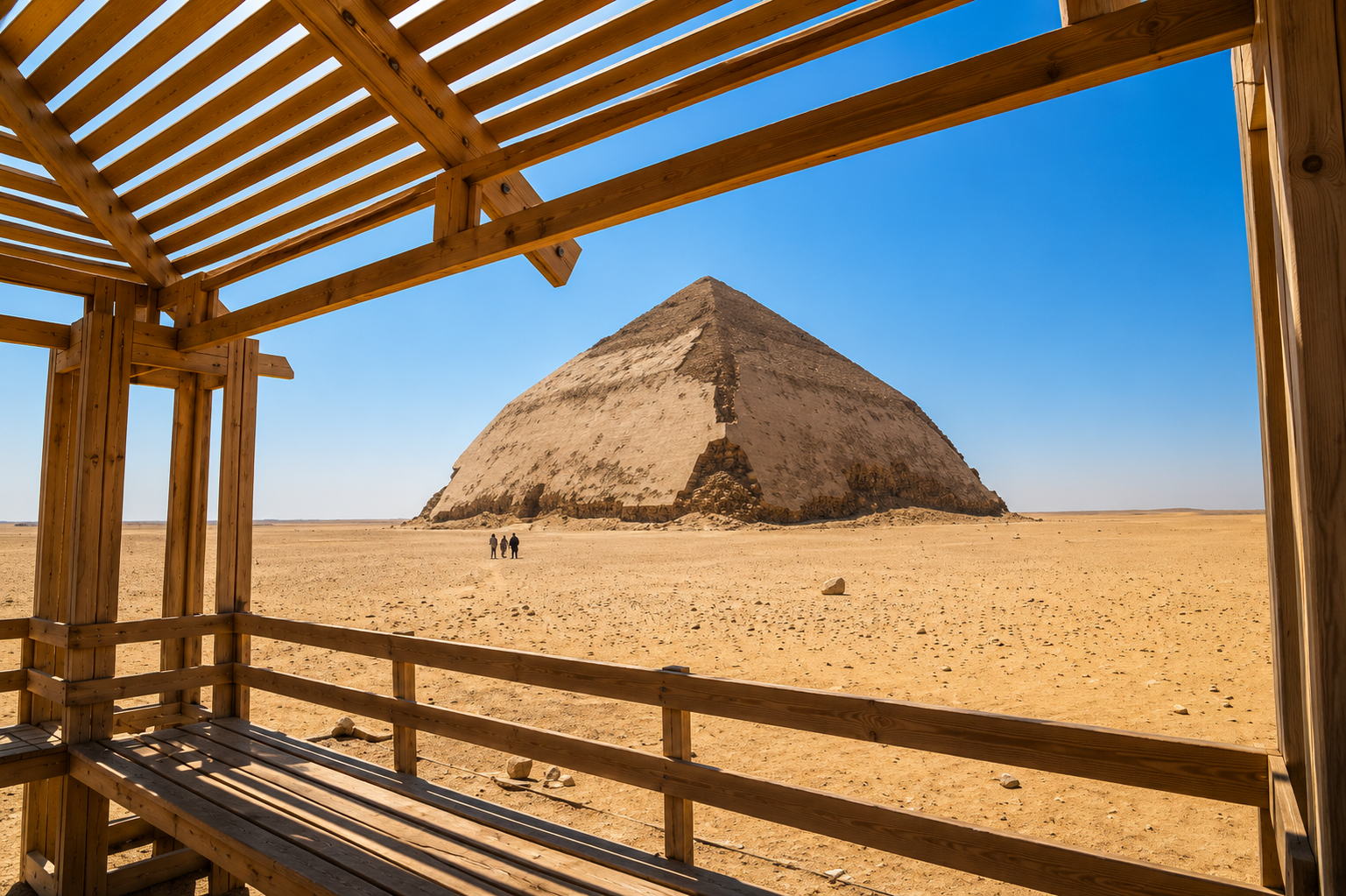
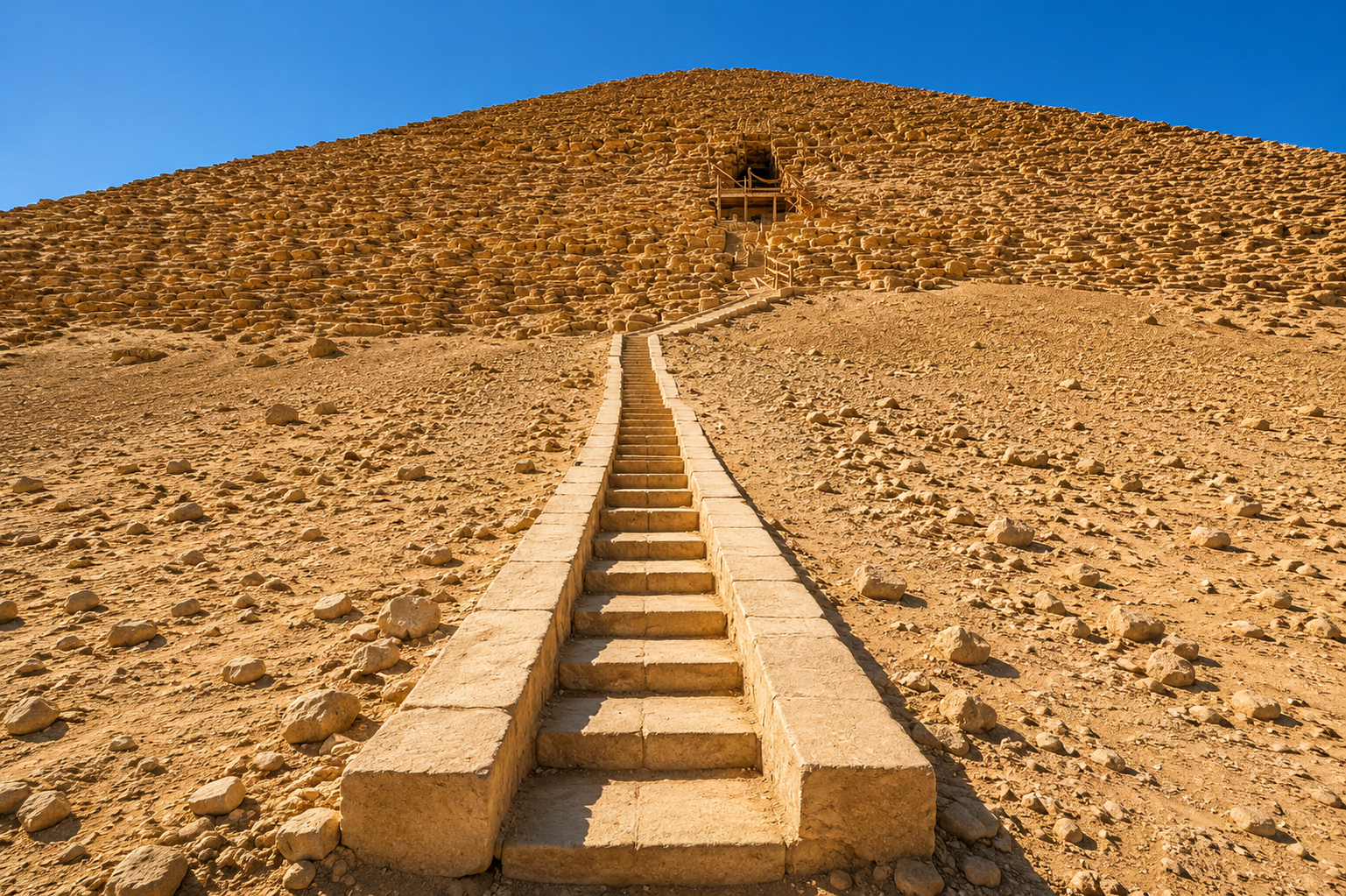
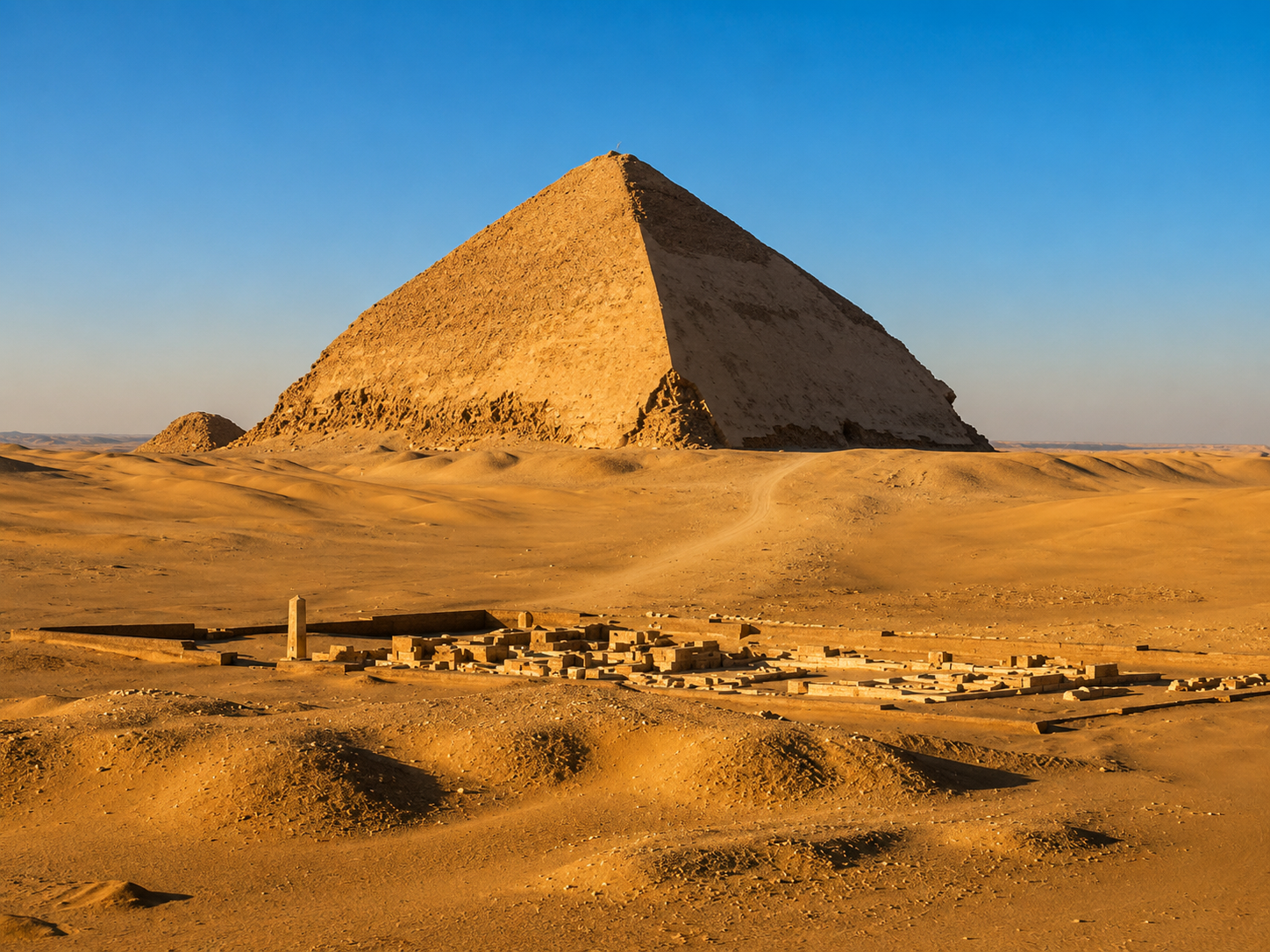
The final stop can be Dahshur, where visitors can see the Bent Pyramid and Red Pyramid.
This itinerary provides a fascinating overview of the evolution of Egyptian architecture.
Best Time to Visit the Colossus
The cooler months from October to April are generally more comfortable for exploring archaeological sites around Cairo.
Early morning is also a good time to visit, particularly during warmer months.
The museum area includes outdoor spaces, so bring water, sunscreen, sunglasses, and comfortable shoes.
How Long Do You Need at Memphis?
A visit to the Memphis open-air museum generally requires around one to two hours.
If you are particularly interested in Ramses II and ancient Egyptian sculpture, you may want to spend additional time examining the Colossus and other monuments.
When combined with Saqqara and Dahshur, Memphis works well as part of a full-day itinerary.
Is the Colossus of Ramses II Worth Visiting?
Yes.
The Colossus is an impressive surviving example of New Kingdom royal sculpture and one of the most important monuments at Memphis.
Its enormous size, connection with Ramses II, and historical relationship with the ancient capital make it a worthwhile stop for travelers exploring the archaeological sites south of Cairo.
It is particularly valuable when visited together with Saqqara and Dahshur.
Frequently Asked Questions
Where is the Colossus of Ramses II?
The Colossus is located at the Memphis open-air museum in Mit Rahina, south of Cairo.
Who built the Colossus of Ramses II?
The statue was commissioned during the reign of Pharaoh Ramses II and was created by ancient Egyptian craftsmen.
What is the Colossus made of?
The surviving monument is carved from limestone.
Why is Ramses II famous?
Ramses II is famous for his long reign, military campaigns, extensive building projects, temples, statues, and monuments throughout Egypt.
Can you see the Colossus of Ramses II today?
Yes. The statue is displayed at the Memphis open-air museum and can be viewed by visitors.
How long should I spend at Memphis?
Around one to two hours is usually enough to explore the main monuments at the museum.
Can I visit Memphis and Saqqara on the same day?
Yes. Memphis and Saqqara are commonly combined because of their close geographical and historical relationship.
Can I visit Memphis, Saqqara and Dahshur in one day?
Yes. A full-day private tour can include all three archaeological destinations.
Is Memphis worth visiting?
Yes. Memphis provides important historical context for understanding ancient Egyptian civilization and the nearby archaeological sites.
Final Thoughts
The Colossus of Ramses II in Memphis is a powerful reminder of the scale and ambition of ancient Egyptian art.
Although the ancient city of Memphis has largely disappeared, surviving monuments such as the Colossus and alabaster sphinx help visitors imagine the importance the city once held.
For the best experience, combine Memphis with Saqqara and Dahshur. Together, these archaeological sites offer a fascinating journey through Egypt's ancient capitals, tombs, temples, and evolving pyramid architecture.