Red Pyramid of Dahshur: History, Architecture & Visitor Guide
Red Pyramid of Dahshur: History, Architecture & Visitor Guide
The Red Pyramid of Dahshur is one of the most important pyramids in Egypt and a major landmark in the development of ancient Egyptian architecture. Located south of Cairo, this impressive monument was built for Pharaoh Sneferu during the Fourth Dynasty.
Known for its reddish limestone core, the Red Pyramid is widely regarded as one of the earliest successfully completed true smooth-sided pyramids in Egypt. Its design represents a major achievement in ancient engineering and helped establish the architectural style that would later reach its most famous form at the Pyramids of Giza.
Today, visitors can explore the pyramid and, when interior access is available, descend inside the monument to see its remarkable chambers.
Where Is the Red Pyramid?
The Red Pyramid is located in the ancient necropolis of Dahshur, south of Cairo.
Dahshur was part of the southern cemetery of Memphis and contains pyramids from both the Old Kingdom and Middle Kingdom. The site is relatively close to Saqqara, making it possible to visit both archaeological areas during the same day.
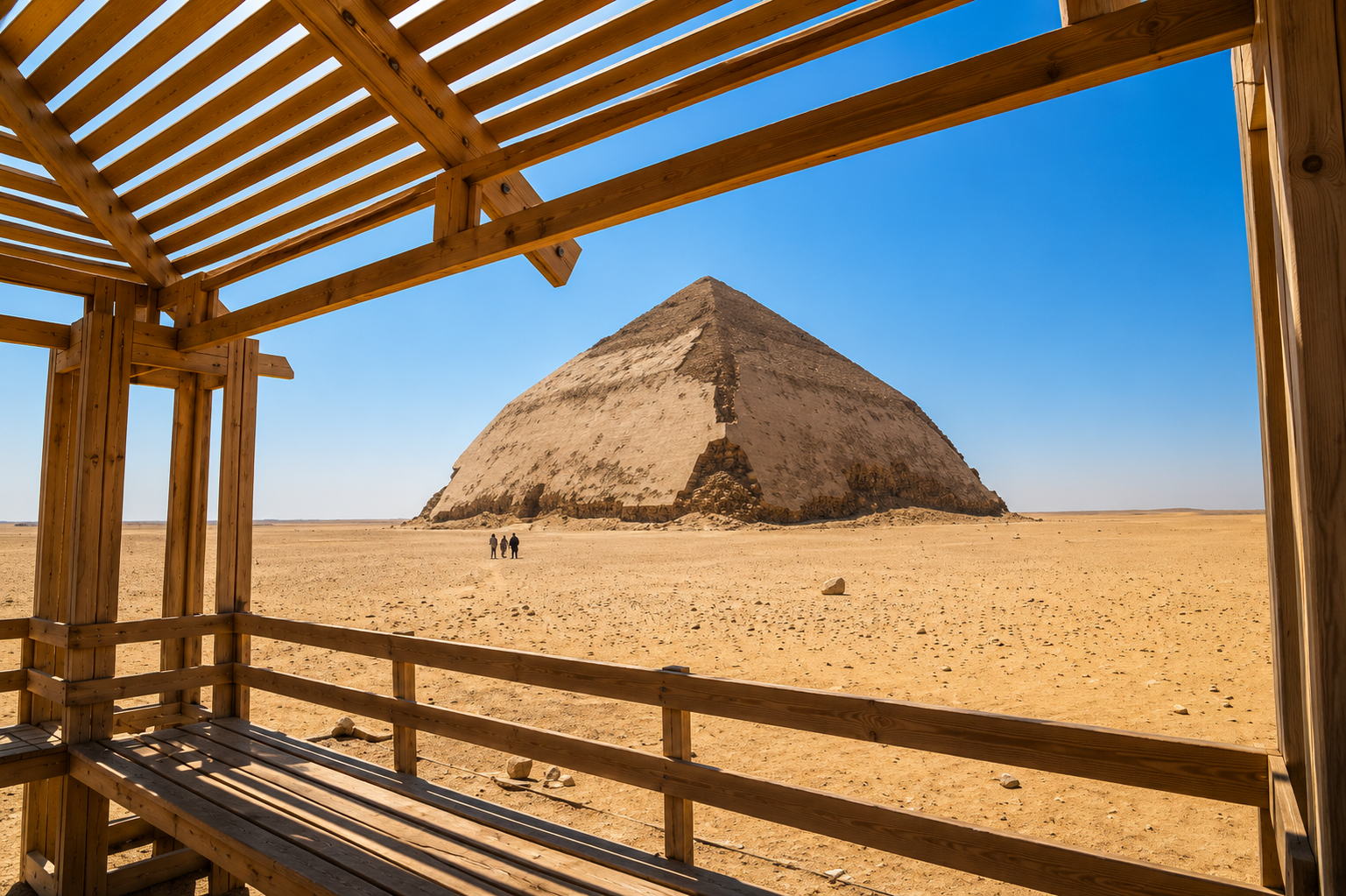
The Red Pyramid stands approximately one kilometer north of the Bent Pyramid, another major monument built for Pharaoh Sneferu.
Who Built the Red Pyramid?
The Red Pyramid was built for Pharaoh Sneferu, the founder of Egypt's Fourth Dynasty and the father of Pharaoh Khufu, who later built the Great Pyramid at Giza.
Sneferu was responsible for several major pyramid projects, including the Bent Pyramid at Dahshur and the pyramid at Meidum.
His building projects played an important role in the evolution of pyramid architecture. The experience gained from earlier projects contributed to the successful construction of the Red Pyramid.
Why Is It Called the Red Pyramid?
The pyramid gets its modern name from the reddish or rusty color of the limestone used in its core.
However, the pyramid did not originally look red.
Like many ancient Egyptian pyramids, it was originally covered with fine white Tura limestone casing. Much of this outer casing was later removed and reused in construction elsewhere, exposing the reddish stone underneath.
This exposed stone is what gives the monument its distinctive appearance today.
How Big Is the Red Pyramid?
The Red Pyramid is the largest pyramid at Dahshur and one of the largest pyramids in Egypt.
It originally stood at approximately 105 meters high, with a base measuring about 220 meters on each side.
It is generally considered the third-largest Egyptian pyramid, after the pyramids of Khufu and Khafre at Giza.
Its enormous size demonstrates the remarkable organizational and engineering capabilities of the Fourth Dynasty.
The First Successful True Pyramid
The greatest importance of the Red Pyramid lies in its architectural design.
Earlier pyramid projects had demonstrated that creating a large smooth-sided pyramid was extremely challenging. The Bent Pyramid at Dahshur, for example, has a distinctive change in angle that reflects adjustments made during construction.
The Red Pyramid used a much shallower angle from the beginning, creating a more stable and consistent pyramid shape.
This design became an important model for the later pyramids of ancient Egypt.
The Red Pyramid and the Bent Pyramid
The Red Pyramid and Bent Pyramid are closely connected because both were built during the reign of Sneferu.
The Bent Pyramid represents an experimental stage in the development of true pyramids. Its lower and upper sections have different angles.
The Red Pyramid, built later, has a consistent slope and successfully achieves the classic smooth-sided form.
Visiting both monuments provides a fascinating opportunity to see how ancient Egyptian architects solved the challenges of pyramid construction.
Can You Go Inside the Red Pyramid?
One of the most exciting aspects of visiting the Red Pyramid is the possibility of entering the monument.
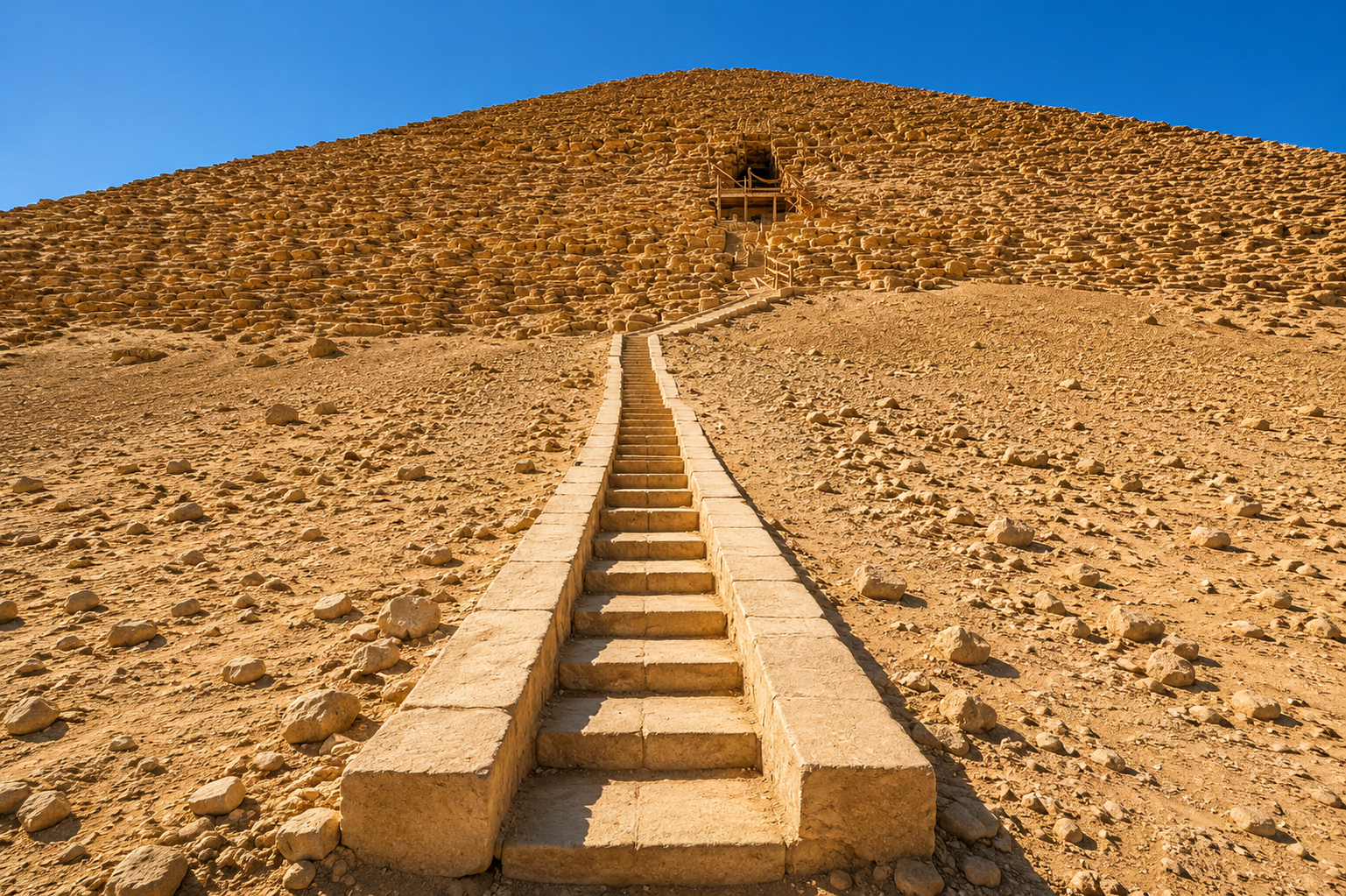
The entrance is located on the northern side and leads to a descending passage. The passage continues toward a series of internal chambers with impressive corbelled roofs.
The interior can be physically demanding because visitors must descend through relatively narrow passages.
Anyone who plans to enter should be comfortable with confined spaces and prepared for a different environment from the open desert outside.
Access can change depending on conservation work and visitor regulations, so it is always sensible to confirm current conditions before your visit.
Inside the Red Pyramid
The interior of the Red Pyramid contains a sequence of passages and chambers.
The first section is reached through the northern entrance and leads downward into the pyramid. From there, visitors continue toward chambers featuring high corbelled ceilings.
A further passage leads toward the deepest chamber, which is generally interpreted as the burial chamber.
The scale and engineering of these internal spaces are impressive, especially considering that they were constructed thousands of years ago.
Why Is the Red Pyramid Important?
The Red Pyramid is important because it represents a crucial stage in the evolution of Egyptian pyramids.
It demonstrates that ancient Egyptian builders had developed the knowledge required to construct a large, stable, smooth-sided pyramid.
The architectural principles demonstrated at Dahshur helped prepare the way for the monumental pyramids built later at Giza.
For this reason, the Red Pyramid is not simply another ancient monument. It is an essential part of the story of how the Egyptian pyramid was developed.
Red Pyramid vs Great Pyramid of Giza
The Great Pyramid of Khufu is much more famous, but the Red Pyramid is extremely important from an architectural perspective.
The Great Pyramid was built later and on a much larger scale.
The Red Pyramid, however, provides an opportunity to see an earlier successful true pyramid and to explore its interior under current visitor arrangements.
Visiting both sites gives travelers a better understanding of how Egyptian pyramid architecture evolved from Sneferu's experiments at Dahshur to the enormous achievements of Khufu at Giza.
Red Pyramid vs Bent Pyramid
The two pyramids at Dahshur are often visited together.
The Bent Pyramid is famous for its unusual change in slope, while the Red Pyramid has a consistent smooth-sided design.
Both were built for Sneferu, making Dahshur an extraordinary place to study the development of pyramid construction.
If you have time for only one pyramid at Dahshur, the Red Pyramid is particularly interesting because of its architectural significance and interior chambers.
Best Time to Visit the Red Pyramid
The cooler months from October to April are generally more comfortable for exploring Dahshur.
Early morning is also a good choice, especially during warmer periods. The desert offers limited shade, so visiting earlier can make walking more pleasant.
Bring drinking water, sunscreen, sunglasses, and a hat.
Comfortable shoes are also recommended, particularly if you plan to explore the pyramid's interior.
How to Get to the Red Pyramid From Cairo
The Red Pyramid can be reached from Cairo by private car, taxi, or organized tour.
Private transportation is particularly convenient because Dahshur is located within a large archaeological area.
Many travelers combine the Red Pyramid with the Bent Pyramid, Saqqara, and Memphis.
A guided tour can also provide useful historical context and help explain how the different pyramids relate to each other.
How Long Do You Need at the Red Pyramid?
Allow approximately one to two hours to visit the Red Pyramid, depending on whether you enter the interior and how much time you spend taking photographs.
If you are visiting both pyramids at Dahshur, around two to three hours is a reasonable amount of time for the main monuments.
A longer itinerary is recommended if you plan to combine Dahshur with Saqqara and Memphis.
Is the Red Pyramid Worth Visiting?
Absolutely.
The Red Pyramid is one of the most important monuments for understanding how ancient Egyptian architects developed the true pyramid form.
Its impressive size, unusual reddish appearance, internal chambers, and connection with Pharaoh Sneferu make it one of the most fascinating archaeological attractions near Cairo.
For travelers who want to go beyond the famous Pyramids of Giza, Dahshur offers a quieter and historically rich experience.
Frequently Asked Questions About the Red Pyramid
Who built the Red Pyramid?
The Red Pyramid was built for Pharaoh Sneferu during Egypt's Fourth Dynasty.
Why is the Red Pyramid red?
Its reddish appearance comes from the exposed reddish limestone core. The pyramid was originally covered with white Tura limestone casing.
How tall is the Red Pyramid?
The Red Pyramid originally reached approximately 105 meters in height.
Is the Red Pyramid the first true pyramid?
It is widely regarded as one of the earliest successfully completed true smooth-sided pyramids and an important milestone in Egyptian pyramid architecture.
Can you go inside the Red Pyramid?
Interior access may be available depending on current visitor arrangements and conservation conditions. The entrance leads to a series of descending passages and chambers.
Is the Red Pyramid bigger than the Pyramid of Menkaure?
Yes. The Red Pyramid is generally considered the third-largest Egyptian pyramid, after the pyramids of Khufu and Khafre at Giza.
Where is the Red Pyramid located?
The Red Pyramid is located at Dahshur, south of Cairo, near the ancient city of Memphis and the Saqqara archaeological area.
Can I visit the Red Pyramid and Bent Pyramid together?
Yes. The two pyramids are close to each other and are commonly included together in Dahshur tours.
How long should I spend at the Red Pyramid?
Around one to two hours is usually enough for the main visit, although additional time may be useful if you explore the interior.
Is the Red Pyramid worth visiting?
Yes. The Red Pyramid is an important monument in the development of ancient Egyptian architecture and offers visitors the chance to explore one of Egypt's earliest successful true pyramids.
Final Thoughts
The Red Pyramid of Dahshur is one of Egypt's most important architectural achievements.
Built for Pharaoh Sneferu, it represents a major step toward the smooth-sided pyramids that later dominated the Giza Plateau. Its impressive dimensions, reddish limestone, and internal chambers make it an unforgettable destination for anyone interested in ancient Egypt.
If you are planning a trip from Cairo, combine the Red Pyramid with the Bent Pyramid, Saqqara, and Memphis. Together, these sites tell the fascinating story of how ancient Egyptian builders transformed the pyramid from an experiment into one of the most recognizable architectural forms in human history.